The forex market’s accessibility has exploded, offering global access to financial markets via personal devices, making entry easier than ever before for beginners.
What is Forex?
Forex, short for foreign exchange, is the global marketplace where currencies are traded. Unlike stocks traded on a centralized exchange, forex is decentralized – a vast network of banks, financial institutions, and individual traders exchanging currencies around the clock. This makes it the most liquid financial market in the world, with trillions of dollars changing hands daily.
Essentially, you’re buying one currency and selling another simultaneously. The value of currencies constantly fluctuates based on a multitude of factors, including economic indicators, geopolitical events, and even consumer behavior. Today, entering this market is remarkably accessible, with numerous platforms and brokers offering tools and resources for new traders.
The market operates 24/5, closing only for weekends, allowing traders to react to global events as they unfold. Understanding this dynamic environment is crucial for anyone venturing into currency trading.
Why Trade Currencies?
The appeal of forex trading lies in its accessibility, high liquidity, and potential for profit. The decentralized nature of the market allows participation from almost anywhere with an internet connection, and the sheer volume of trading means currencies can be bought and sold quickly and efficiently. Traders aim to profit from fluctuations in exchange rates, capitalizing on even small price movements.
Furthermore, forex offers leverage, allowing traders to control larger positions with a relatively small amount of capital. While this amplifies potential gains, it also increases risk. The 24/5 operating hours provide flexibility, enabling trading around other commitments.
With readily available educational resources and platforms, entering the forex market today is easier than ever. However, success requires dedication, discipline, and a thorough understanding of market dynamics.

Understanding Currency Pairs
Currency trading revolves around exchanging one currency for another; these are quoted in pairs, reflecting the value of one currency relative to the other.
Major Currency Pairs
The most frequently traded currency pairs, often referred to as “majors,” involve the US dollar (USD) paired with other significant global currencies. These pairs typically exhibit the highest liquidity and the tightest spreads, making them popular choices for both novice and experienced traders.
Key major pairs include EUR/USD (Euro/US Dollar), USD/JPY (US Dollar/Japanese Yen), GBP/USD (British Pound/US Dollar), AUD/USD (Australian Dollar/US Dollar), USD/CAD (US Dollar/Canadian Dollar), and USD/CHF (US Dollar/Swiss Franc).
Their prominence stems from the economic strength and stability of the countries they represent, alongside the US’s central role in global finance. Traders closely monitor economic indicators, political events, and central bank policies within these nations to anticipate price movements. Understanding these pairs is fundamental for anyone beginning their journey into forex trading.
Minor Currency Pairs
Often called “cross-currency pairs,” minor pairs don’t include the US dollar. While they generally have lower trading volumes and wider spreads than major pairs, they still offer significant opportunities for profit. These pairs are valuable for diversifying a trading portfolio and can react differently to global events.
Common examples of minor pairs are EUR/GBP (Euro/British Pound), EUR/JPY (Euro/Japanese Yen), GBP/JPY (British Pound/Japanese Yen), AUD/JPY (Australian Dollar/Japanese Yen), and CHF/JPY (Swiss Franc/Japanese Yen).
Trading minor pairs requires a bit more caution due to their increased volatility and potential for slippage. However, skilled traders can capitalize on these characteristics. Analyzing the economic fundamentals of the two countries involved is crucial for successful trading in these markets, offering unique insights beyond USD-focused pairs.
Exotic Currency Pairs
Exotic currency pairs involve a major currency paired with a currency from an emerging or smaller economy. Examples include USD/TRY (US Dollar/Turkish Lira), USD/ZAR (US Dollar/South African Rand), and USD/MXN (US Dollar/Mexican Peso). These pairs typically exhibit the widest spreads and the lowest liquidity, making them considerably riskier to trade.
Volatility is a defining characteristic of exotic pairs, influenced by political instability, economic uncertainty, and less frequent trading volumes. Successful trading demands a deep understanding of the specific country’s economic and political landscape.
While the risk is higher, potential rewards can also be substantial. Exotic pairs offer opportunities to profit from significant price swings, but require advanced trading skills, robust risk management strategies, and a higher tolerance for market fluctuations. They are generally not recommended for beginner traders.
Key Forex Terminology
Understanding core terms like pips, lots, leverage, margin, bid, ask, and spread is crucial for navigating the forex market and executing successful trades.
Pips and Lots
Pips, or percentage in point, represent the smallest incremental move a currency pair can make. For most pairs, a pip is 0.0001, meaning the fourth decimal place. However, for pairs involving the Japanese Yen (JPY), a pip is 0.01, representing the second decimal place. Understanding pips is vital for calculating profit and loss.
Lots, on the other hand, define the size of your trade. A standard lot is 100,000 units of the base currency, a mini lot is 10,000 units, and a micro lot is 1,000 units. Traders choose lot sizes based on their risk tolerance and account size. Larger lots offer potentially higher profits, but also carry greater risk. Beginners often start with micro lots to limit potential losses while learning the market dynamics.
Calculating pip value depends on the lot size and the currency pair. Mastering these concepts is foundational for effective forex trading and risk management.
Leverage and Margin
Leverage in forex trading allows you to control a larger position with a smaller amount of capital. Brokers offer varying leverage ratios, such as 50:1, 100:1, or even higher. While leverage can amplify potential profits, it also significantly increases potential losses. It’s a double-edged sword requiring careful consideration.
Margin is the collateral required to open and maintain a leveraged position. It’s expressed as a percentage of the total position size. For example, with 100:1 leverage, you only need 1% margin. If the market moves against your position, and your equity falls below the required margin level, a margin call is triggered, requiring you to deposit more funds or risk having your position automatically closed.
Understanding leverage and margin is crucial for managing risk effectively. Beginners should start with lower leverage ratios to minimize potential downsides.
Bid, Ask, and Spread
The bid price is the highest price a buyer is willing to pay for a currency pair at a given moment. Conversely, the ask price represents the lowest price a seller is willing to accept. These prices are constantly fluctuating based on market demand and supply, creating dynamic trading opportunities.
The spread is the difference between the bid and ask price. It’s essentially the cost of trading, representing the broker’s commission. A tighter spread means lower transaction costs, benefiting traders. Spreads can vary depending on the currency pair, broker, and market conditions.

When you buy (go long), you pay the ask price; when you sell (go short), you receive the bid price. Understanding these core concepts is fundamental to interpreting price quotes and calculating potential profits or losses.

Forex Market Analysis
Successful trading relies on analyzing global economics, government policies, and consumer behavior to predict currency movements and capitalize on market trends.
Technical Analysis
Technical analysis in forex trading involves studying historical price charts and utilizing various indicators to identify patterns and predict future price movements. Traders employing this method believe that all known information is already reflected in the price, and therefore, focusing on past price action is key.
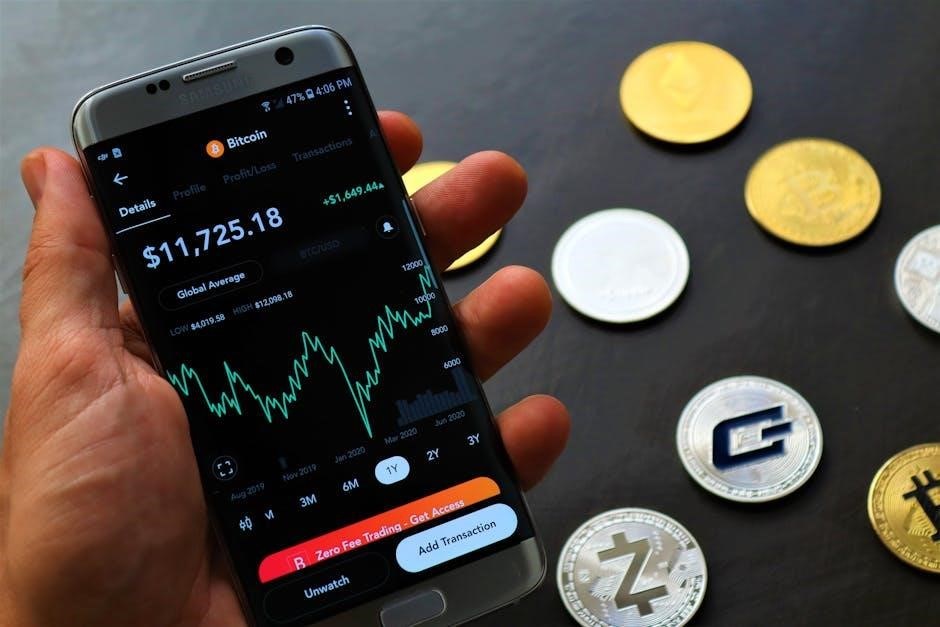
Common tools include trend lines, support and resistance levels, and chart patterns like head and shoulders or double tops/bottoms. Furthermore, oscillators like the Relative Strength Index (RSI) and Moving Average Convergence Divergence (MACD) help gauge momentum and potential overbought or oversold conditions.
Understanding these tools allows traders to formulate strategies based on probabilities, aiming to enter trades when the odds are in their favor. It’s crucial to remember that technical analysis isn’t foolproof, but it provides a structured approach to interpreting market data and making informed decisions.
Fundamental Analysis
Fundamental analysis in forex focuses on economic and political factors that influence a currency’s value. Unlike technical analysis, which examines price charts, fundamental analysis delves into the underlying drivers of currency movements. These include interest rates, inflation, Gross Domestic Product (GDP) growth, employment figures, and government policies.
Traders using this approach analyze economic indicators released by countries to assess the relative strength of their currencies. For example, a country with rising interest rates might attract foreign investment, increasing demand for its currency. Conversely, political instability or a weakening economy could lead to currency depreciation.
Staying informed about global economic events and understanding their potential impact on currencies is vital. It requires monitoring news releases, central bank announcements, and geopolitical developments to make informed trading decisions.
Finding a Forex Broker
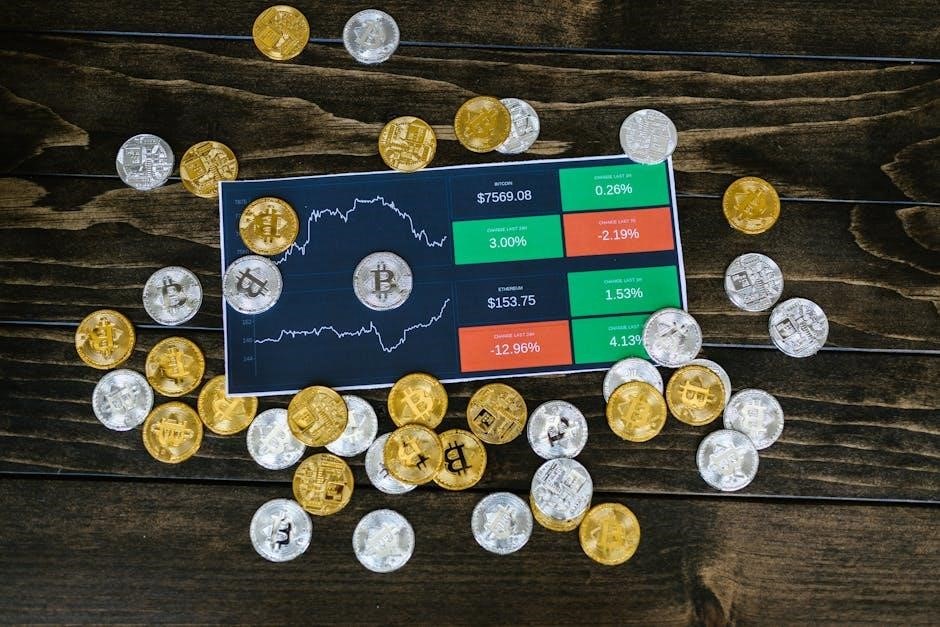
Selecting a broker is crucial; platforms and tools are now widely accessible, allowing new traders to easily place trades within the dynamic forex market.
Choosing a Regulated Broker
Prioritizing regulation is paramount when selecting a forex broker, especially for newcomers navigating the complexities of currency trading. A regulated broker operates under the scrutiny of a financial authority, offering a layer of security and accountability often absent with unregulated entities. These authorities, like the Bank of Canada, enforce standards designed to protect traders’ funds and ensure fair trading practices.
Look for brokers authorized by reputable bodies, as this indicates adherence to strict financial guidelines. Regulation doesn’t eliminate risk entirely, but it significantly reduces the potential for fraudulent activity or market manipulation. Before committing, verify the broker’s regulatory status through the official website of the governing body. This due diligence is a fundamental step in safeguarding your investment and fostering a trustworthy trading experience within the expansive forex landscape.
Broker Platforms and Tools
Modern forex brokers offer a diverse array of platforms and tools designed to cater to varying experience levels, from complete beginners to seasoned traders. These platforms typically provide real-time market data, charting capabilities, and order execution functionalities. User-friendliness is crucial, particularly for those new to forex; intuitive interfaces simplify navigation and trade placement.
Essential tools include currency converters, enabling quick assessment of exchange rates, and historical data charts, facilitating technical analysis. Some brokers offer advanced features like automated trading systems or risk management tools. Interactive charts displaying live mid-market exchange rates, coupled with alert systems for favorable rate changes, are also valuable assets. Selecting a broker with a robust and accessible platform is key to a successful trading journey.
Risk Management in Forex Trading
Protecting your capital is paramount; utilize stop-loss and take-profit orders, alongside careful position sizing, to navigate the forex market’s inherent volatility.
Stop-Loss Orders
A stop-loss order is a crucial risk management tool for any forex trader, especially those new to the market. It’s essentially an instruction to your broker to automatically close your trade if the price moves against you to a predetermined level. This limits potential losses, protecting your capital from significant downturns.
Imagine you buy a currency pair believing it will rise, but the market unexpectedly turns. Without a stop-loss, your losses could theoretically be unlimited. However, with a stop-loss in place, your maximum loss is capped at the difference between your entry price and the stop-loss level.
Determining where to place your stop-loss is key. Common strategies involve setting it based on technical analysis – for example, below a recent swing low if you’re buying, or above a recent swing high if you’re selling. Proper stop-loss placement is vital for consistent, sustainable trading.
Take-Profit Orders
Alongside stop-loss orders, take-profit orders are essential for automating your trading strategy and securing profits. A take-profit order instructs your broker to automatically close your trade when the price reaches a specific, predetermined level favorable to your position. This removes emotional decision-making and ensures you capitalize on winning trades.
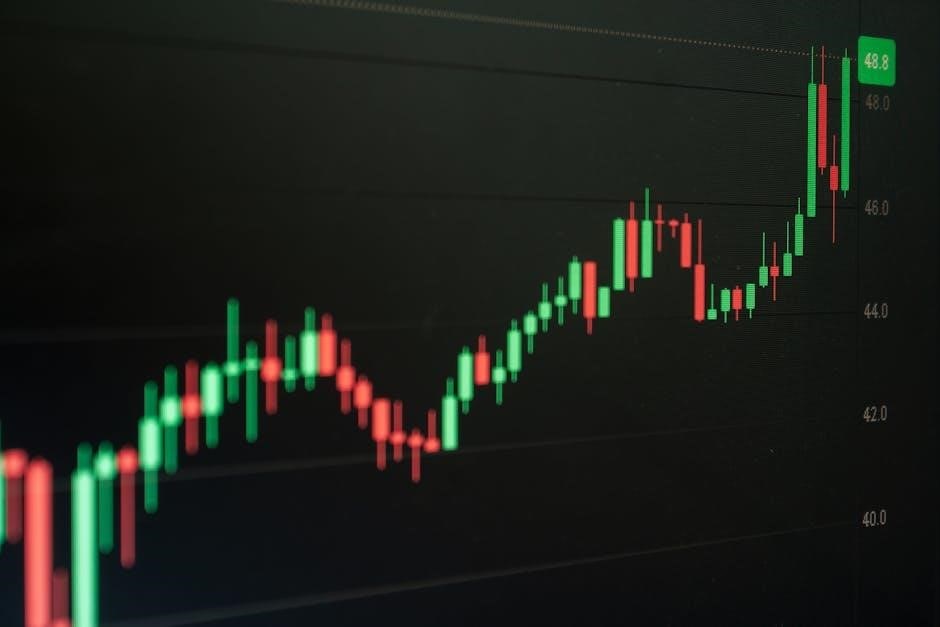
For example, if you buy a currency pair anticipating an increase, a take-profit order set above your entry price will automatically close the trade and lock in your profit when that level is reached. Without a take-profit, you risk the market reversing and eroding your gains.
Like stop-loss placement, determining the appropriate take-profit level requires careful consideration. Technical analysis, such as identifying resistance levels, can help you set realistic and achievable profit targets. Utilizing take-profit orders contributes to a disciplined and potentially more profitable trading approach.
Position Sizing
Proper position sizing is paramount for long-term success in forex trading, often overlooked by beginners. It involves calculating the appropriate trade size based on your account balance, risk tolerance, and the potential price movement. The goal is to risk only a small percentage of your capital on any single trade – typically 1-2% is recommended.
Overleveraging, or taking on positions that are too large, can quickly deplete your account during unfavorable market swings. Conversely, positions that are too small may not generate sufficient profits to justify the effort. Factors like currency pair volatility and your stop-loss distance influence optimal position size.
Understanding lot sizes and their corresponding value is crucial. Careful position sizing protects your capital and allows you to withstand inevitable losing trades, fostering a sustainable trading strategy.