
Tennis Racket Buying Guide ― A Comprehensive Plan (02/03/2026)
Navigating the world of tennis rackets requires understanding key specifications like weight, balance, and head size, ensuring a confident and informed purchase for optimal performance.
Selecting the ideal tennis racket significantly impacts gameplay, comfort, and injury prevention; understanding specifications empowers players to find a racket perfectly suited to their abilities.
Why Choosing the Right Racket Matters
A properly fitted racket enhances performance, allowing for greater power, control, and spin, ultimately improving your game. Conversely, an ill-suited racket can lead to discomfort, fatigue, and even increase the risk of arm injuries, hindering progress and enjoyment. Selecting wisely optimizes technique and minimizes strain;
Understanding Key Racket Specifications
Essential specs include head size, length, weight, balance, grip size, swingweight, flex, and string pattern. Each significantly impacts playability; weight affects power and arm safety, while balance influences maneuverability. Comprehending these elements empowers informed decisions, aligning the racket to your unique style.
Tennis Racket Head Size
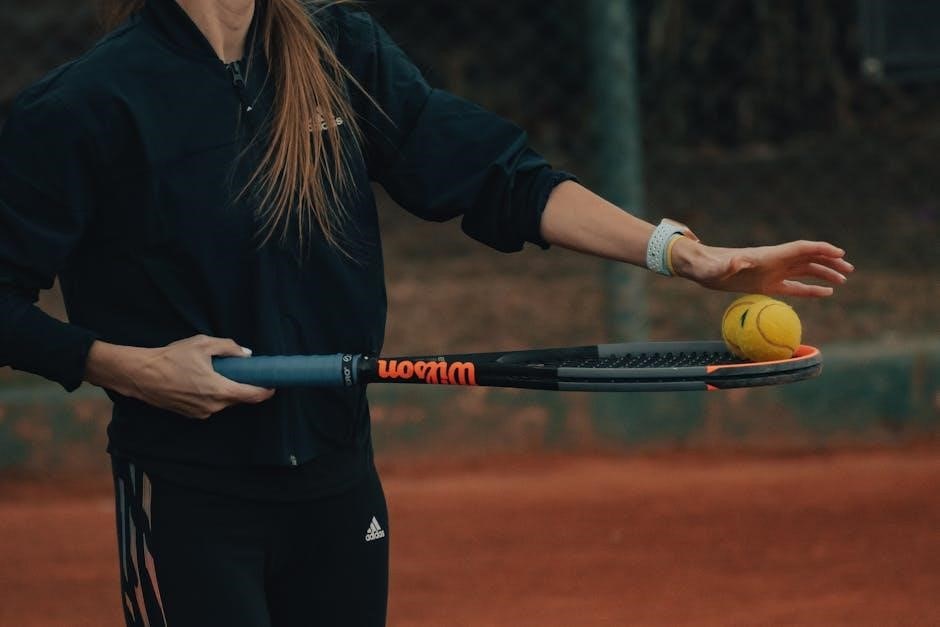
Head size, ranging from 95 to 110 sq. in., dramatically influences power and control, impacting the sweet spot and overall feel during play.
Overview of Common Head Sizes (95, 100, 105, 110 sq. in.)
Common head sizes include 95, 100, 105, and 110 square inches. Smaller 95 sq. in. heads offer precision, while 100 sq. in. provide a balance. Larger 105 and 110 sq. in. heads maximize the sweet spot, boosting power and forgiveness, ideal for beginners or those prioritizing ease of use.
Head Size and its Impact on Power & Control
Larger head sizes (105-110 sq. in.) generally increase power due to a bigger sweet spot, but reduce control. Conversely, smaller heads (95-100 sq. in.) offer enhanced control and precision, demanding more accurate contact, though power output is typically lower, requiring more developed technique.
Tennis Racket Length
Standard racket lengths vary, impacting reach and leverage; longer rackets offer extended reach, while shorter ones enhance maneuverability for quicker reactions on the court.
Standard Racket Lengths and Variations
Typically, tennis rackets measure 27 inches in length, representing the most common standard for adult players. However, variations exist, ranging from 25 to 29.5 inches. Shorter rackets, around 25-26 inches, are often favored by juniors or players with shorter reaches, promoting easier handling. Conversely, longer rackets, extending to 29.5 inches, provide increased reach and leverage, benefiting players with longer swings or those seeking more power.
How Racket Length Affects Reach and Leverage
A longer racket directly translates to an expanded reach, allowing players to cover more of the court and return wider shots with greater ease. This extended length also enhances leverage, generating increased swing speed and potentially more power on groundstrokes and serves. However, longer rackets can be harder to maneuver.
Tennis Racket Weight
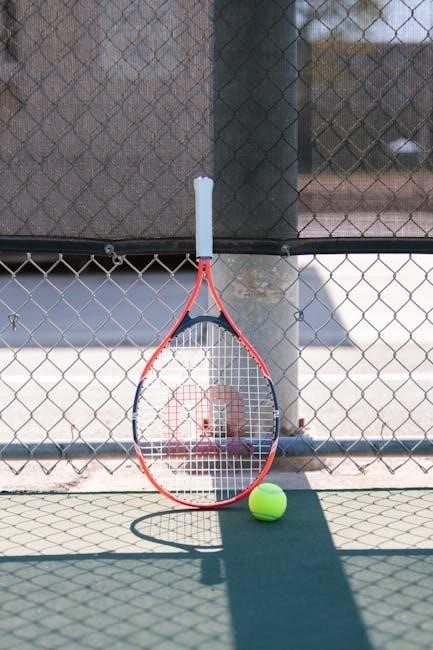
Racket weight significantly impacts power, maneuverability, and arm safety; heavier rackets offer stability and power, while lighter ones prioritize swing speed and control.
Racket Weight Ranges and Player Levels
Generally, lighter rackets (under 10 oz) suit beginners and players with shorter swings, enhancing maneuverability. Intermediate players often prefer 10-11.5 oz rackets for a balance of power and control. Advanced players frequently utilize heavier rackets (11.5 oz+) for stability, power, and shock absorption, benefiting consistent, powerful swings.
The Relationship Between Weight, Power, and Arm Safety
Heavier rackets, while demanding more strength, transmit less shock to the arm, potentially reducing injury risk. However, swinging a weight you can’t control leads to form breakdown and increased strain. Prioritize a weight allowing 3-4 hours of play without fatigue, safeguarding technique and arm health.
Tennis Racket Balance
Balance – head light, head heavy, or even – significantly impacts swing speed and maneuverability, influencing how easily a racket can be controlled during play.
Head Light, Head Heavy, and Even Balance Explained
Head-light rackets offer greater maneuverability, ideal for quick reactions at the net, while head-heavy rackets provide more power for groundstrokes. Evenly balanced rackets offer a blend of both, suiting all-court players seeking versatility; understanding these differences is crucial for selecting a racket that complements your playing style.
Balance Point and its Influence on Swing Speed & Maneuverability
A racket’s balance point significantly impacts swing speed and maneuverability; a head-light balance enhances quicker swings and easier handling, while a head-heavy balance boosts power but reduces speed. Finding the right balance optimizes control and allows for faster reactions on the court.
Tennis Racket Grip Size
Selecting the correct grip size is crucial for comfort and control, preventing injury and maximizing performance through a secure and comfortable hold on the racket.
Determining Your Ideal Grip Size
Measuring your hand is the first step; place your dominant hand flat, then measure from the tip of your ring finger to the second line on your palm. Common sizes range from 4 1/8 to 4 5/8 inches. If between sizes, consider a slightly smaller grip, as you can always build it up with an overgrip for a personalized, comfortable feel.
The Importance of Proper Grip Size for Comfort and Control
A correct grip size minimizes tension, preventing blisters and maximizing feel for enhanced control. Too small a grip increases wrist action, potentially leading to injury, while too large hinders wrist movement and reduces racket maneuverability. Finding the right fit is crucial for consistent, powerful strokes.
Racket Swingweight
Swingweight measures a racket’s resistance to swinging, impacting feel and power; higher swingweight offers power, while lower swingweight enhances maneuverability and control.
Understanding Swingweight and its Calculation
Swingweight isn’t simply a racket’s weight, but how that weight is distributed; it’s calculated based on weight, balance point, and length, revealing how easily a racket swings. A higher number indicates more effort to swing, translating to greater power, but potentially reduced maneuverability. Conversely, a lower swingweight offers easier handling.
Swingweight and its Impact on Racket Feel and Power
Swingweight profoundly impacts racket feel and power generation; higher swingweights deliver more substantial hits, ideal for players prioritizing power, while lower swingweights enhance maneuverability and control. Players seeking effortless swings and quicker reactions often prefer lighter swingweights, balancing power with finesse.
Racket Flex (Stiffness)
Racket flex, measured by RA ratings, influences power, control, and comfort; stiffer rackets offer more power, while flexible rackets provide enhanced feel and control.
Racket Flex Ratings and What They Mean
Flex ratings, often expressed using a scale, indicate a racket’s stiffness; lower numbers (e.g., below 60) denote more flexible frames, offering greater ball pocketing and comfort. Higher ratings (above 65) signify stiffer rackets, delivering increased power and reduced energy loss upon impact, but potentially less feel.
Flex and its Effect on Power, Control, and Comfort
Racket flex significantly impacts gameplay; stiffer rackets enhance power by minimizing energy absorption, while flexible frames provide more control and comfort due to increased dwell time. However, stiffer options may transmit more shock, potentially affecting arm health and overall feel during extended play.

String Pattern
String patterns – open or dense – dramatically influence spin and control, impacting ball trajectory and the ability to generate topspin during rallies.
Open vs. Dense String Patterns
Open string patterns, featuring fewer strings and wider spacing, excel at generating significant spin, allowing players to brush up on the ball for enhanced topspin and slice capabilities. Conversely, dense string patterns, with more strings closely spaced, prioritize control and precision, offering a more stable feel and reduced ball pocketing, ideal for flat hitters.
How String Pattern Affects Spin and Control
String pattern directly influences a racket’s playability; open patterns (less dense) boost spin potential by allowing greater string deformation upon impact, enhancing ball bite and arc. Denser patterns, however, restrict string movement, maximizing control and precision, though potentially sacrificing some spin capability for consistent shotmaking.

Racket Materials
Racket construction utilizes graphite, aluminum, or composites, each impacting performance and durability; graphite offers a blend of power and feel, while aluminum provides affordability.
Graphite, Aluminum, and Composite Materials
Graphite is popular for its stiffness, lightweight nature, and excellent power transfer, favored by advanced players. Aluminum rackets are budget-friendly and durable, suitable for beginners. Composite materials blend graphite with other fibers, offering a balance of characteristics. Material choice significantly influences racket feel, power, and overall performance, impacting both control and comfort during play.
Material Impact on Racket Performance and Durability
Racket materials directly affect performance; graphite enhances power and feel, while aluminum provides affordability and resilience. Composite materials offer a balanced blend. Durability varies – graphite can be more susceptible to damage than aluminum. Selecting the right material ensures longevity and optimizes play, aligning with skill level and playing style.
Racket Frame Construction
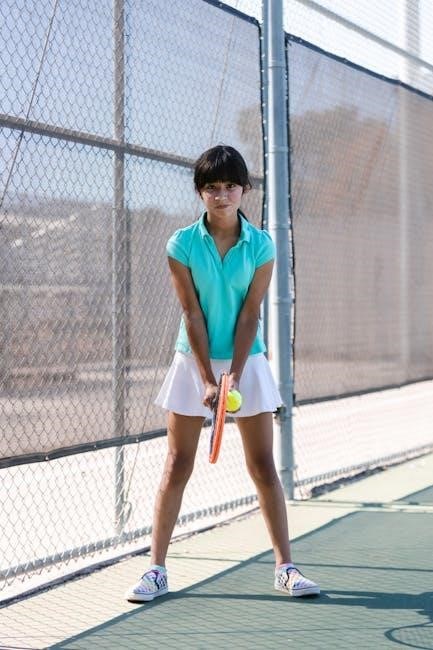
Frame technologies significantly influence racket feel, offering features like aerodynamic designs and optimized stability for enhanced control and power during gameplay.
Understanding Different Frame Technologies
Modern rackets boast innovative frame constructions, including features like IsoMetric heads for expanded sweet spots and aerodynamic designs reducing drag for faster swing speeds. Manufacturers employ technologies like braided graphite and optimized bridge designs to enhance stability, power, and overall racket feel, catering to diverse playing styles and skill levels.
How Frame Construction Influences Racket Feel
Frame materials and construction directly impact a racket’s feel – stiffer frames offer more power but less comfort, while flexible frames provide better feel and control. Technologies altering frame shape and material distribution influence vibration dampening, resulting in a more connected feel during ball contact and enhanced player feedback.
Choosing a Racket Based on Playing Style
Selecting a racket aligned with your playing style—baseline, serve-and-volley—is crucial for maximizing performance and enjoying the game to its fullest potential.
Rackets for Baseline Players
Baseline players benefit from rackets offering control and spin, typically featuring head-heavy balance for stability and power during groundstrokes. Consider rackets with a larger head size (100-110 sq. in.) for a generous sweet spot, enhancing consistency. Heavier weights (10.5-11.5 oz) provide stability, while moderate flex allows for feel and control, crucial for extended rallies and strategic shot-making.
Rackets for Serve-and-Volley Players
Serve-and-volley players require rackets prioritizing maneuverability and quick handling for rapid net play. Lighter rackets (9.5-10.5 oz) with head-light balance facilitate fast swing speeds and easy positioning. Smaller head sizes (95-100 sq. in.) offer enhanced control for precise volleys, while stiffer frames provide power on serves and punchy first volleys.

Racket Selection by Skill Level
Choosing a racket aligned with your skill level—beginner, intermediate, or advanced—is crucial for maximizing performance and enjoyment on the court.
Beginner Rackets: Features and Recommendations
For newcomers, prioritize larger head sizes (100-110 sq. in.) offering a generous sweet spot for easier contact and forgiveness. Lighter weight rackets (9-10.5 oz) enhance maneuverability, aiding swing development. Consider head-light balance for improved control and a comfortable grip size to prevent strain, fostering a positive learning experience.
Intermediate and Advanced Rackets: Performance Focus
Players with established technique benefit from smaller head sizes (95-100 sq. in.) for precision and control. Heavier rackets (11-12.5 oz) deliver power and stability, while balanced or head-heavy options suit different styles. Experiment with string patterns and flex to fine-tune feel and maximize performance.

Racket Comparison Tools and Resources
Online websites and specification charts simplify racket evaluation, allowing players to compare weight, balance, head size, and other crucial features effectively.
Online Racket Comparison Websites
Numerous platforms offer detailed tennis racket comparisons, streamlining the selection process. These resources allow filtering by skill level, playing style, and specific specifications like weight or head size. Interactive tools present side-by-side analyses, highlighting key differences and aiding informed decisions. Websites often include user reviews, providing valuable insights beyond technical data, ultimately helping you pinpoint your ideal racket.
Utilizing Racket Specifications Charts
Racket specification charts are invaluable tools for discerning players. They systematically present crucial data – weight, balance, head size, swingweight, and flex – enabling direct comparisons between models. Understanding these charts empowers you to correlate specifications with your playing style, optimizing for power, control, or maneuverability, leading to a more effective racket choice.
Racket Maintenance and Care
Proper stringing, maintaining correct tension, and careful storage are essential for prolonging your racket’s life and consistently delivering peak performance on the court.
Proper Stringing and Tension
Regular restringing is crucial; strings lose tension over time, impacting playability. Tension affects power and control – lower tension offers power, while higher tension provides control. Consider your playing style and the racket’s specifications when choosing tension. Professional stringing ensures optimal performance and prevents frame damage, extending the racket’s lifespan.
Racket Storage and Protection
Protect your investment with a quality racket cover to shield against scratches, dust, and UV damage. Avoid extreme temperatures, as they can warp the frame or affect string tension. Store rackets in a cool, dry place, ideally horizontally, to prevent deformation and maintain optimal playing condition for longevity.
Ultimately, selecting the ideal tennis racket is a personalized journey. Consider your playing style, skill level, and physical attributes. Utilize comparison tools and don’t hesitate to demo several options before committing, ensuring a racket that enhances your game and maximizes enjoyment on the court.